The honest gesture: painting the figure in four minutes
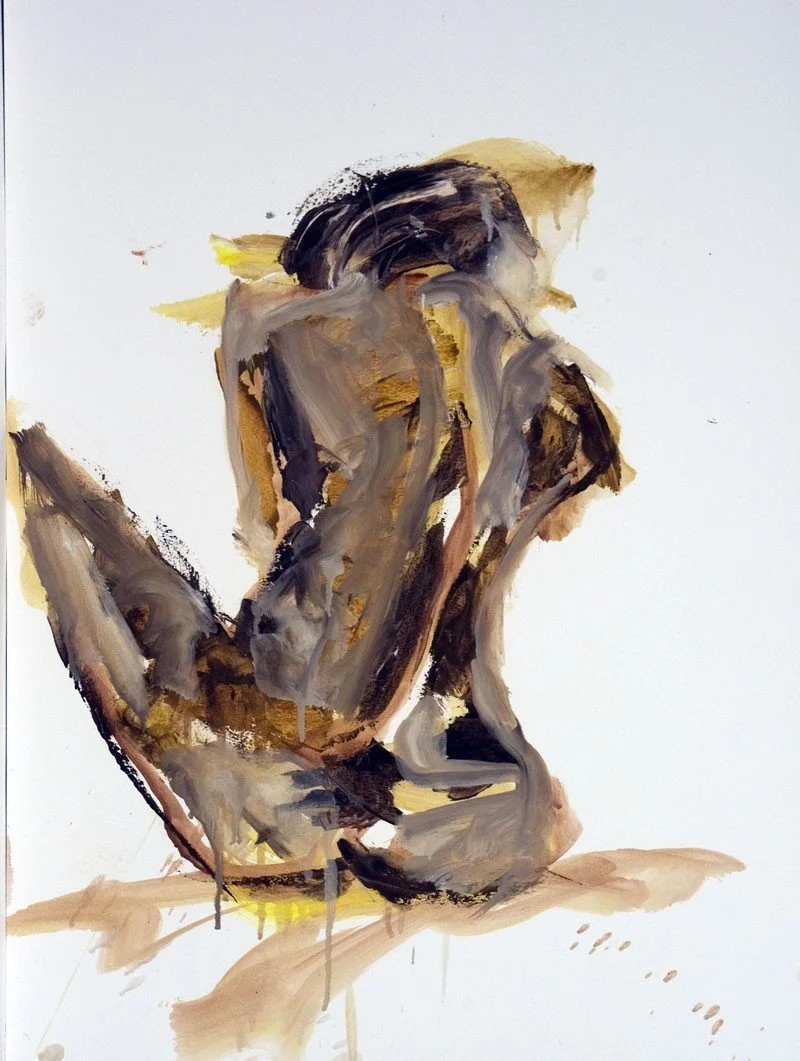
A gesture painting takes four minutes. The model holds a pose for exactly that long, and I finish the picture in the same span. I am AnneKarin Glass, an award-winning oil painter based in San Francisco with more than 40 years of practice, and gesture painting is the part of my work where I stop thinking and respond. Painting a model expands my awareness of sight, sensation, and emotion. Each picture is my reaction to what I see and feel in those four minutes.
What is a gesture painting?
A gesture painting records the action, form, and pose of a model in a short, timed session. The goal is the essence of the pose, not a careful rendering of the surface. The idea comes from gesture drawing, where Wikipedia's entry on gesture drawing describes poses lasting from about 10 seconds up to five minutes. My gesture paintings are the same exercise in oil paint.
The same entry notes that some artists use a quick study as a warm-up or as the first step toward a longer work, while others treat it as the end product. My gesture paintings stand as finished pictures in my Gestures collection, and they also inform my larger oil paintings on canvas.
Why does a gesture painting require a four-minute pose?
Four minutes is the shortest time in which I can work in oil paint and still keep the immediacy of my first impression. Oil needs more time than charcoal, because I change colors and switch between brush and palette knife. After some months of experimentation, four minutes emerged as the right length to capture the essence of the pose.
For figure studies I have used mostly charcoal, pastels, and oil paint. With charcoal, a 15-second pose can sometimes be adequate, though most often the model poses for one or two minutes.
Four minutes is long by drawing conventions, and the sources draw the line in different places. Wikipedia gives a range up to five minutes, yet also notes that drawings longer than two minutes are usually not considered gestures, because the artist gains time to measure and plan. Tate's line coursework guide suggests a two-minute timer for a quick portrait, and shortening it to one minute or even 30 seconds. Oil paint changes the arithmetic. Any extra time goes into amplifying the background, not into refining the figure.
Why paint the figure so fast?
Speed forces selection. Wikipedia notes that frequent repetition of very rapid figure drawing builds an instinctive understanding of human proportions, and that the fast pace helps an artist loosen up and avoid a stiff style. Tate makes a similar point about quick sketching: it "forces you to look at the most essential lines."
Those essentials are what I look for in the model. You can see what four minutes in oil looks like in my Gestures collection.
What happens to my attention during a gesture session?
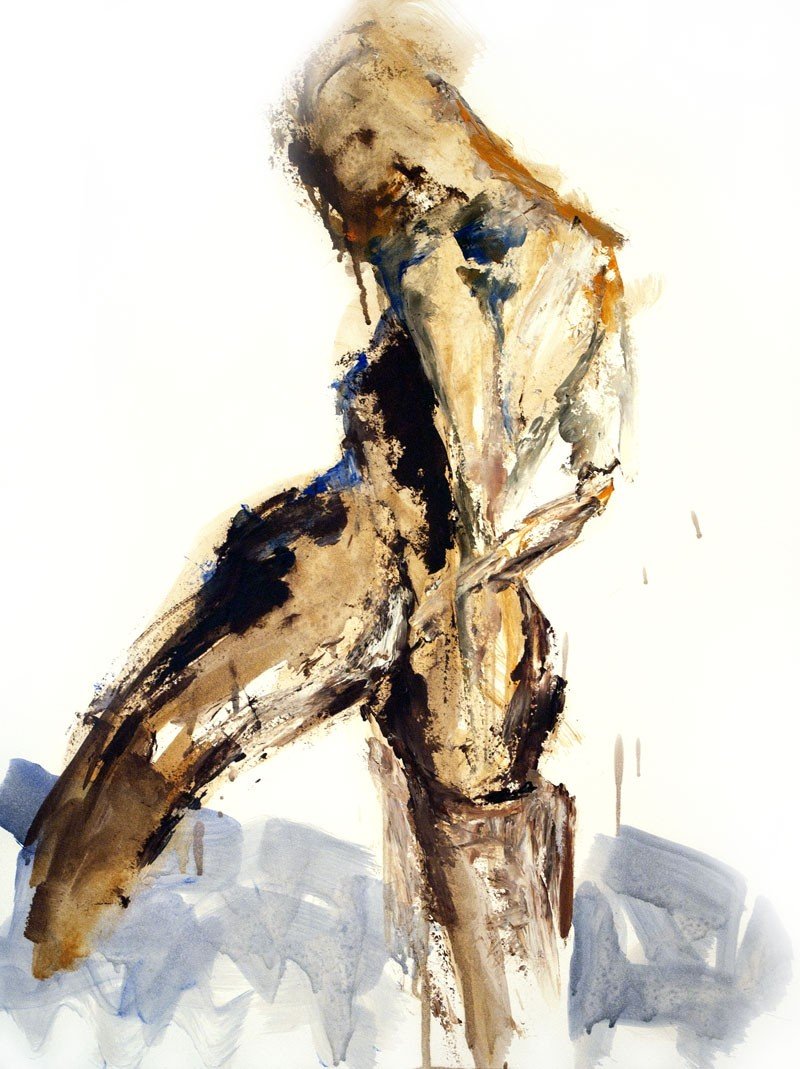
Once the model strikes the pose, my perception consumes me completely. I experience an expansion of consciousness in vision, visceral sensation, and emotion. I do not reflect on history or technique, I do not consider what the finished piece will look like, and I do not judge whether the brushstrokes or the paint application are correct.
I do not anticipate. I am entirely in the moment, and I respond. That is all. This rapid translation from what I see to the mark I make lets me reach a raw truth that longer, more calculated sessions cannot.
How do gesture paintings fit into my broader body of work?
Gesture paintings are an essential part of my ongoing exploration of the human form, alongside my other collections, including Figures and Abstracts. I have studied the figure since the 1980s and spent hundreds of hours doing so. Each gesture painting is a culmination of those observations and of my experience in expressing my sensations in response to the model.
These rapid studies inform my larger oil paintings on canvas and keep my brushwork loose, honest, and connected to human vitality. You can read more about my background on the artist page, or browse the full body of work in my Collections.
Frequently asked questions
-
The model uses a timer and holds the pose for exactly four minutes. That gives me enough time to work in oil paint while keeping the painting spontaneous.
-
Sources vary. Wikipedia describes gesture poses of roughly 10 seconds to five minutes, and Tate suggests starting with two minutes and shortening to one minute or 30 seconds. In my own work, a gesture painting in oil lasts four minutes, because oil paint needs more time than charcoal.
-
No. The integrity of a gesture painting depends on its immediacy, so once the four minutes are up the painting is finished. Any extra time goes into amplifying the background, not into refining the figure.
-
The intensive focus on sight, sensation, and emotion trains my eye to capture what is essential, and that carries directly into my Figures and Abstracts work.
-
Charcoal is excellent for split-second sketches, but oil paint lets me work with color temperature and rich texture, which makes the four-minute window a real technical and emotional challenge.
Sources and references
Art reference and education
Wikipedia: "Gesture drawing", https://en.wikipedia.org/wiki/Gesture_drawing
Tate: "Line Coursework Guide", https://www.tate.org.uk/art/line-coursework-guide